How to Find the Perfect Size of Pleated Blinds for Your Window
When renting an apartment, we often have limited options for modifying its permanent fixtures. Furniture selection is typically up to us, and in most cases, we’re allowed to drill into walls or even paint them in our favorite color with a bit of luck. But that freedom has its limits. If the apartment lacks external shutters, there's a good chance their installation is prohibited. This often effective method of darkening rooms may simply not be available to us.
However, this doesn’t mean we’re left without any choice—external shutters aren't the only solution. There are many types of blackout blinds and sun protection systems available on the market that can be installed indoors, most often directly on the window.

Pleated Blinds for Different Needs
Pleated blinds are probably the simplest solution for darkening and/or protecting your privacy in rental apartments. They can easily replace curtains, drapes, and even external shutters. Blackout blinds work especially well in bedrooms or children’s rooms. They allow you to create full darkness even during daylight hours. This is particularly useful if you work night shifts and need to sleep during the day or if your child needs to go to bed before it gets dark outside.
Pleated blinds can also serve as privacy screens—here, the fabric lets in light but prevents people from seeing inside. This option is especially practical in kitchens or living rooms, particularly in autumn and winter when it gets dark early and the lights have to be turned on sooner.
How to Achieve the Desired Effect?
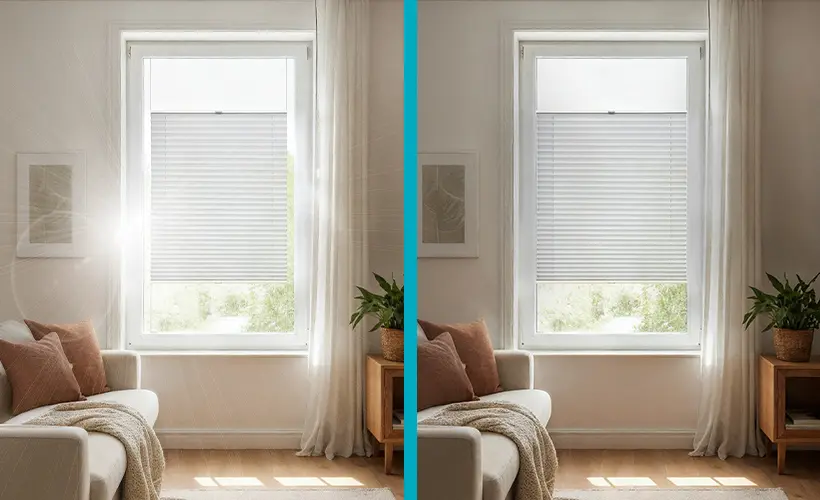
For a blind—regardless of its function—to perform effectively, not only the material properties and quality of workmanship are key, but most importantly, the right size. A blind that is too small won’t cover the entire glass surface. If the material is too narrow, light will pass through the sides. If it’s too short, light will enter from below.
Choosing a size that is too large also isn’t a good solution. A pleated blind that is too long usually isn’t a problem in non-invasive installations—you simply don’t extend it all the way, and the excess fabric remains rolled up. However, a blind that is too wide can interfere with window operation—especially when opening and closing. Additionally, the material won’t sit tightly against the glass, allowing light to seep through. For permanently mounted blinds requiring drilling, the height must also be measured precisely since there’s no room for extra material.
So How Do You Determine the Right Size of a Pleated Blind?
Determining the correct size is easier than it might seem. Thanks to our custom-made pleated blinds, the process becomes even simpler—you can define the width to the nearest centimeter.
But how exactly do you measure the width? Which measurement gap is crucial? That depends on the type of blind you choose. Whether you go for a pleated blind with drilling or without, the measurement method differs slightly—though the overall process remains very simple.
Measuring the Width and Height for Pleated Blinds Without Drilling
Want to order pleated blinds without drilling? Here’s how to measure your window to ensure the blind fits the glass perfectly and functions as it should.
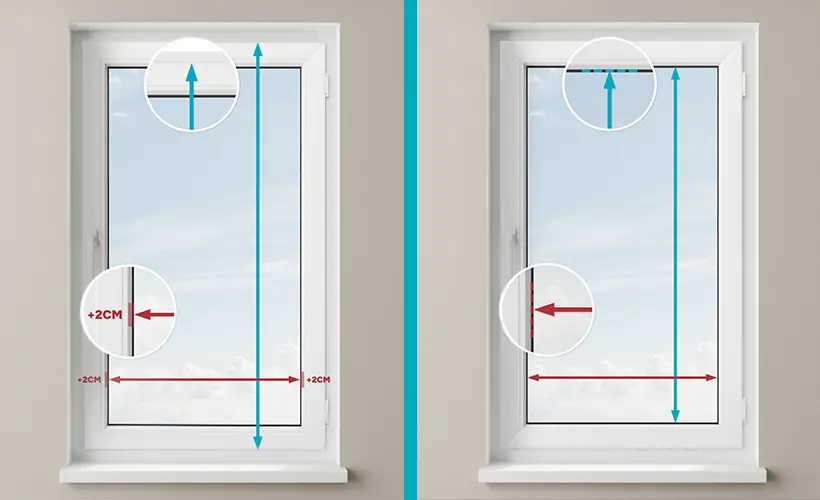
Measure the width of the glass, which is the internal distance between the window frames. After taking this measurement, add 4–5 cm to the result. This ensures the blind will fully cover the width of the window, and the fabric won’t interfere with the window handles. You can safely provide this calculated size when placing your order.
Beige Window Pleated Blind
Beige Window Pleated Blind
12
new
Estika.pl
A Stylish Accent in Every Room
The beige pleated blind is the perfect choice for those who value elegance and subtlety. Its delicate, neutral shade blends seamlessly with a variety of interior styles – from modern to classic. A beige pleated blind adds warmth and coziness without overwhelming the space. It’s an ideal solution for the living room, bedroom, kitchen, or office, giving each room a unique and refined character. Choose a beige blind to highlight the individual style of your home!
Full Control Over Light and Comfort
With the beige pleated blind, you gain full control over the amount of light entering the room. The precise adjustment system allows you to set the lighting level just the way you want – from gently diffused sunlight to complete blackout. This blind is perfect for both living areas and bedrooms, protecting you from glare during the day and ensuring privacy in the evening. The beige color further warms the interior, adding harmony and a sense of calm.
Durability, Easy Installation, and Convenience
The beige pleated blind is a symbol of quality and durability. Made from high-quality materials, it is resistant to fading and daily wear, ensuring long-lasting performance. Its installation is simple and requires no specialized tools – you can mount it yourself without the need for professionals. Plus, it’s incredibly easy to maintain – just wipe it with a damp cloth to keep it looking flawless for years to come.
Material of the Beige Pleated Blind: Polyester (PES)
The pleated blind is made from a high-quality, durable material that offers excellent protection against sunlight. It is crafted from polyester fabric folded into a pleated structure and coated with an antistatic layer that prevents dust accumulation. The PES material used in pleated blinds is extremely resilient and does not deform under heat. It retains its color even with sun exposure and does not attract moths. Additionally, polyester is lightweight and easy to maintain.
Polyester fibers do not absorb moisture, making this blind a perfect choice for high-humidity areas such as kitchens or bathrooms.
Beige Honeycomb Blinds
Beige Honeycomb Blinds
36
new
Estika.pl
Natural Elegance and Harmony in Your Home
The "Honeycomb" pleated blind in a soft beige shade is more than just a window covering – it’s a design element that brings natural elegance and harmony to your interior. Its subtle color blends beautifully with a wide range of décor styles, from classic to modern, adding a warm and cozy touch to any room. Perfect for those who want to combine functionality with distinctive design.
Thermal Comfort and Energy Efficiency Within Reach
Thanks to its unique honeycomb structure, our beige pleated blind not only enhances your décor but also ensures your comfort. The cellular design of the fabric forms a natural thermal insulation barrier that helps maintain optimal indoor temperatures all year round. In winter, it retains heat; in summer, it reflects sunlight, preventing the room from overheating. Make a smart choice – choose a solution that lowers energy costs and enhances your well-being.
Practicality and Ease of Use
Installing "Honeycomb" pleated blinds has never been easier. No need for specialized tools or complicated instructions – just a few minutes is all it takes to enjoy a perfect window decoration. Additionally, the blind is made from stain-resistant material, making cleaning effortless – simply wipe it with a damp cloth, and it looks like new. It’s the ideal solution for those who value convenience and time-saving functionality.
Cream Blackout Pleated Blind
Cream Blackout Pleated Blind
43
new
Estika.pl
Subtle Elegance and Complete Blackout – Cream Blackout Pleated Blind
Introduce a gentle accent to your home that also provides full protection from sunlight. The cream blackout pleated blind is a blend of style and functionality that fits beautifully into a variety of interior designs. The cream shade of the pleats complements both modern and classic spaces, adding warmth and coziness. Perfect for the living room, bedroom, or office, where privacy and comfort are top priorities.
Comfort and Light Control – The Perfect Everyday Solution
With the cream blackout pleated blind, you have full control over the amount of light entering your space. Thanks to advanced pleating technology, you can precisely adjust the light permeability – from complete blackout, ideal for bedrooms, to gentle light diffusion in the living room. It’s not just about blocking out light; it’s about creating the perfect atmosphere for relaxation or work. Installation is simple and quick, and keeping the pleats clean is effortless.
Durability and Sophisticated Style – Cream Pleated Blind for Years to Come
The cream blackout pleated blind is made from high-quality materials that are UV-resistant and retain their beautiful color for years. With its sturdy construction, the blind remains in excellent condition regardless of how often it’s used. Its versatile cream shade brings a sense of calm to any interior while also providing excellent thermal and acoustic insulation. It’s an investment in comfort, style, and long-lasting quality that you’ll appreciate every day.
And What About the Height of the Blind?
We offer two standard height options since pleated blinds unfold downward, making centimeter-level precision unnecessary. Simply measure the height of the entire window sash.
If your measurement is less than 150 cm, choose the 150 cm size. For larger dimensions, select the 220 cm option. For blinds for taller windows or balcony doors, we encourage you to contact us.
Let’s break it down with an example: your glass is 71 cm wide. You add 4 cm to that, resulting in 75 cm—this will be your pleated blind’s width. The sash height is 110 cm, so you choose the standard 150 cm height. Result: you order a non-drilled pleated blind measuring 75 x 150 cm.
How to Measure a Window for a Drilled Pleated Blind?
For invasive pleated blinds installed with drilling, the width measurement works differently. You don’t just measure the glass—you also include the black rubber gasket surrounding it. No extra centimeters are added to this measurement—just enter the exact dimension when placing your order.
What About the Height?
The height is measured the same way—taking into account the glass and the black rubber gasket. Note: for drilled pleated blinds, the standard heights (150 cm and 220 cm) used for non-drilled blinds don’t apply. The height must be entered exactly, just like the width.
Example:
The width of the glass including the gasket is 75 cm, and the height with the same method is 115 cm. In this case, you order a drilled pleated blind sized 75 x 115 cm.
We Know What to Measure—But How to Measure It Correctly?
This question may seem trivial or unnecessary, but in reality, it’s very relevant. Depending on how you measure, you can get different results—only one of which is correct. So how do you measure to get the right size?
Light Grey Window Pleated Blind
Light Grey Window Pleated Blind
10
new
Estika.pl
Elegance and Functionality in Your Home
Discover a new standard in window decoration with our light grey pleated blind. This exceptional product combines the aesthetics of modern design with everyday practicality. It fits perfectly into any interior, adding a touch of freshness and elegance. Thanks to its subtle grey shade, the blind harmonizes beautifully with both light and dark wall colors, creating a balanced and inviting atmosphere. It’s the perfect solution for those who value both style and comfort.
Complete Control of Light and Privacy
Enjoy full control over the amount of light entering your home with our pleated blind. Its adjustable design allows you to precisely manage the level of illumination – from gently diffused sunlight to complete blackout. No matter the time of day, you can create the perfect conditions for rest, work, or relaxation. Additionally, the blind offers excellent privacy protection, shielding your interior from outside view.
Durability and Ease of Use
The light grey pleated blind offers more than just a beautiful look – it also delivers dependable quality. Made from premium materials, it is resistant to fading and damage, ensuring long-lasting performance. The simple installation and operation system makes it suitable for any room – from the living room and bedroom to the kitchen. Maintenance is exceptionally easy – just wipe it with a damp cloth to keep it looking great for years to come.
White-Grey Honeycomb Blinds
White-Grey Honeycomb Blinds
33
new
Estika.pl
🐝 White and Grey Honeycomb Pleated Blinds – Elegance and Functionality in One!
Bring subtle elegance into your home with white and grey honeycomb pleated blinds! The delicate white tone beautifully brightens up any room, adding a sense of lightness and freshness. Honeycomb pleated blinds are not only an aesthetic choice but also offer top-tier functionality. Thanks to their unique honeycomb structure, they provide excellent thermal insulation, helping maintain the ideal indoor temperature all year round. Save on energy bills and enjoy uncompromised comfort!
☀️ Light and Privacy Control – Blinds for Every Occasion
The white and grey honeycomb pleated blinds are a perfect solution if you're looking for a way to regulate light in your home. Thanks to the advanced honeycomb design, you can freely control the amount of light entering the room – from gentle diffusion to full blackout. It's an ideal option for those who value privacy while still enjoying natural daylight. Gain full control over your home’s ambiance with pleated blinds that adapt to your needs.
🔧 Quick Installation, Hassle-Free Use
The white and grey honeycomb pleated blinds are extremely easy to install – no complicated tools required. Thanks to their precise fit for various window types, honeycomb pleated blinds provide a stylish and secure finish. Their unique structure not only effectively blocks unwanted views but also offers exceptional durability and easy maintenance. This is a product that meets the needs of the most demanding users, offering everyday comfort and style.
Ash Grey Blackout Pleated Blind
Ash Grey Blackout Pleated Blind
42
new
Estika.pl
Elegant and Functional – Ash Grey Blackout Pleated Blind
Are you looking for a practical yet stylish solution that brings harmony and comfort to your interior? The ash grey blackout pleated blind is the perfect choice for those who value subtle elegance and functionality. The grey shade blends beautifully with modern interiors, adding class and sophistication. Additionally, thanks to its full blackout properties, it ensures privacy and protection from intense sunlight, creating the perfect conditions for relaxation at any time of day.
Everyday Convenience – Precise Light Control
The ash grey blackout pleated blind offers full control over the amount of light entering the room. Its innovative design allows you to position the blind at various heights, adjusting the lighting to your preferences. Darkening the room helps create ideal conditions for rest or work, regardless of the time of day. The high-quality materials make it easy to keep clean, and the installation is quick and intuitive, making it a perfect everyday solution.
Long-Lasting Durability and Style – Ash Grey Pleated Blind
By choosing the ash grey blackout pleated blind, you're investing in a product that will serve you for years. Made from durable, UV-resistant materials, the blind maintains its elegant appearance over time, without fading or deforming from use. It pairs perfectly with a variety of interior styles, from modern to more classic designs. Additionally, its thermal insulation properties help maintain the right indoor temperature, making it an ideal solution for any home.
Some Tips for Accurate Measurement
-
Choose the right measuring tool!
Remember, not all rulers or tape measures are equally accurate. With larger distances, differences of several centimeters can occur, which is critical when choosing the correct blind size. Make sure your measuring tool—like a tape measure—is high quality and has a centimeter scale that complies with standards.
-
Apply the measuring tool correctly!
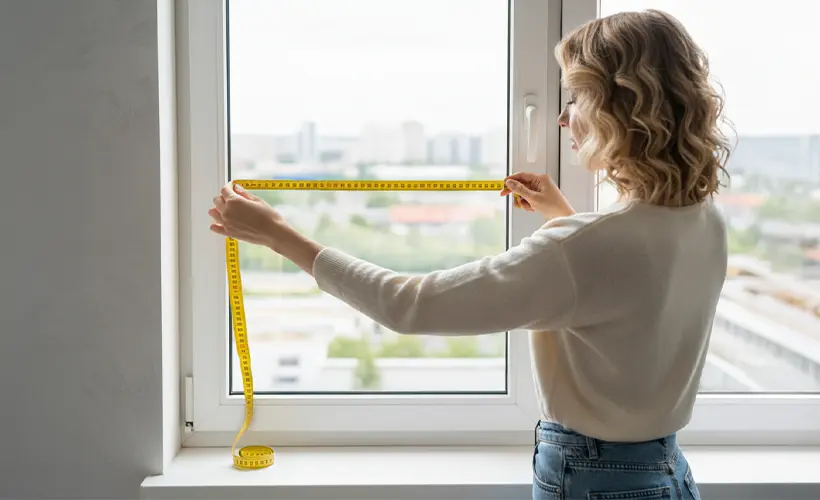
What does “correctly” mean? Primarily, the measuring tape should be as vertical or horizontal as possible. Modern laser distance meters can be very precise, but even they won’t work well if misused. A classic tape measure is perfectly adequate if used correctly. It's important that your measuring tool lies parallel to the surface you're measuring.
-
Problems with classic tape measures and potential solutions
Applying a rigid tape measure directly to the glass can be problematic, as the glass often sits recessed within the window frame. This makes precise placement difficult. In such cases, it’s better to use a flexible tool, like a measuring tape, which is easier to adjust to the shape and position of the glass.
Reading the Measurement Also Matters!
Even if you place the tool correctly, analog devices can sometimes make it difficult to read the measurement accurately. While small errors might not matter much in the case of window blinds, it’s still essential to read the result perpendicularly to the measuring tool. In extreme cases, imprecise reading can result in a few centimeters’ deviation—especially if you read it from a distance.
Of course, it’s easier if your measuring tool displays the result digitally. Then there’s no risk of misreading—the value on the screen is exactly what you need. Provided, of course, you follow all the earlier measurement rules.
Pay Attention to the Position of the Window Handle!
In most cases, the position of the window handle is crucial for Klemmfix blinds mounted without drilling. During measurement, make sure that the blind fabric doesn’t cover the handle—pay particular attention to the distance between the glass and the handle’s edge. For invasive pleated blinds mounted inside the window frame, the handle usually doesn’t play a significant role.
If you follow these tips, choosing the right size of pleated blinds shouldn’t be a problem. Once you know the correct size, you can move on to the more enjoyable part—choosing a color or pattern. Depending on whether you need complete darkness or just partial privacy, there are different options to choose from.
This article covers the two most popular types of pleated blinds: Klemmfix (no drilling required) and standard invasive blinds that require drilling into the window frame for installation. However, you may encounter other types of interior blinds that require different measurement methods. When in doubt, always refer to the measurement instructions, which are essential for ordering such blinds. The binding instructions are always those provided by the manufacturer or seller, shown directly on the product’s sizing page. It may happen that the required dimensions and allowable deviations differ—don’t let that discourage you!
White Window Pleated Blind
White Window Pleated Blind
2
new
Estika.pl
Elegance in Your Window: Made-to-Measure White Pleated Blind
Add a unique charm to your interiors with a made-to-measure white pleated blind. Designed with both style and functionality in mind, this blind combines minimalist design with maximum comfort. Perfect for any room, it subtly lets light through, creating a warm and cozy atmosphere. Tailored to your needs and available in a wide range of sizes – it guarantees a perfect fit for every window. Choose quality that truly impresses!
Functionality and Comfort: Why Choose a Made-to-Measure Pleated Blind?
A pleated blind is not just a stylish addition – it’s also a practical everyday solution. With the ability to adjust the level of sunlight, it provides optimal conditions for work, rest, and relaxation. It’s a great choice for the living room, bedroom, or kitchen. Made from high-quality, fade-resistant material and easy to clean – this is a product that will last for years while keeping its flawless look.
Perfect Fit: A Pleated Blind That Matches Any Interior
Your home, your rules! With our made-to-measure pleated blind, you can shape your space just the way you like it. A white pleated blind is a timeless classic that never goes out of style. It complements modern interiors just as well as traditional ones. Simple yet elegant – it creates the perfect backdrop for any décor. Treat yourself to a space that reflects your personality!
White-Grey Honeycomb Blinds
White-Grey Honeycomb Blinds
33
new
Estika.pl
🐝 White and Grey Honeycomb Pleated Blinds – Elegance and Functionality in One!
Bring subtle elegance into your home with white and grey honeycomb pleated blinds! The delicate white tone beautifully brightens up any room, adding a sense of lightness and freshness. Honeycomb pleated blinds are not only an aesthetic choice but also offer top-tier functionality. Thanks to their unique honeycomb structure, they provide excellent thermal insulation, helping maintain the ideal indoor temperature all year round. Save on energy bills and enjoy uncompromised comfort!
☀️ Light and Privacy Control – Blinds for Every Occasion
The white and grey honeycomb pleated blinds are a perfect solution if you're looking for a way to regulate light in your home. Thanks to the advanced honeycomb design, you can freely control the amount of light entering the room – from gentle diffusion to full blackout. It's an ideal option for those who value privacy while still enjoying natural daylight. Gain full control over your home’s ambiance with pleated blinds that adapt to your needs.
🔧 Quick Installation, Hassle-Free Use
The white and grey honeycomb pleated blinds are extremely easy to install – no complicated tools required. Thanks to their precise fit for various window types, honeycomb pleated blinds provide a stylish and secure finish. Their unique structure not only effectively blocks unwanted views but also offers exceptional durability and easy maintenance. This is a product that meets the needs of the most demanding users, offering everyday comfort and style.
White Blackout Pleated Blind
White Blackout Pleated Blind
40
new
Estika.pl
Perfect Sun Protection – White Blackout Pleated Blind
Do your windows need reliable yet stylish protection from excessive sunlight? The white blackout pleated blind is the perfect solution! Made from high-quality material, it provides complete room darkening, making it ideal for bedrooms, living rooms, or offices. Enjoy privacy and coolness without bothersome sun rays. The white color of the pleats matches any interior style, adding elegance and subtlety.
Functionality and Aesthetics in One – White Blackout Pleated Blind
Pleated blinds combine functionality with aesthetics, and this model is the essence of practicality. Thanks to its innovative design, the pleated blind allows precise control over the amount of light entering the room. The blackout feature not only enhances comfort but also helps save energy – keeping the room cooler in summer and warmer in winter. The product is easy to install and maintain, with adjustable positioning to tailor the lighting to your preferences.
Perfect Craftsmanship and Durability – White Pleated Blinds for Any Interior
Looking for a blind that will serve you for years? The white blackout pleated blind is a long-term investment. Made from UV-resistant materials, it maintains its appearance over time without losing functionality or aesthetic appeal. It fits perfectly with both modern and classic interior designs. Installation on the window frame is quick and non-invasive, and the product’s durability ensures satisfaction for many years to come.
Questions Can Always Arise!
It’s important to be able to ask someone for help when things are unclear—someone who can explain all issues related to blinds. With us, you have that option. You’ll receive not only precise and detailed measurement instructions, but also technical support if the documentation turns out to be too difficult to understand. Don’t hesitate to ask questions—we all want you to get exactly what you need: pleated blinds perfectly tailored to your windows down to the centimeter so they can perform flawlessly!
Despite our easy-to-use online store, it’s still possible to get “lost” while choosing the right blind. That’s perfectly normal, and we’re here to help if you’re unsure about what you need. We also encourage you to read other blog posts where we discuss important topics related to pleated blinds. Still, the key point is measurement—if done correctly, it will help you avoid the biggest source of stress in the selection process. Once you’ve measured properly, you can be confident that the blind will at least fit your window in terms of size. Color choice is a separate matter and usually one of taste, but the blind’s functionality depends entirely on getting the dimensions right.
So make sure the dimensions are correct before placing your order. Since we’re talking about custom-made products, getting it right the first time will save you time—you’ll be able to use your blind right away without having to wait for a replacement.
Have more questions about measuring pleated blinds? Don’t hesitate to comment on the article or contact us at...


 Standard Pleated Blinds
 Blackout Pleated Blinds
 Honeycomb Pleated Blinds
 Day & Night Blinds
 Blackout Blinds
 Standard Blinds
 Custom Roof Blinds


 Style & DesignHome office without tired eyes – how can you improve comfort while working at a computer?25 June 2026 r.
 Style & DesignShift work and sleep – how to get proper rest during the day?22 June 2026 r.
 KnowhowA home without air conditioning – how can you improve summer comfort with simple solutions?15 June 2026 r.
 Style & DesignSlow morning – how can it transform your morning?11 June 2026 r.


